compositions French and Italian Ars nova differ in many ways: the first is always a constructive plan that governs the structural elements, while the Italian is more freedom, melodic and rhythmic fuid expanse scan. These characteristics are present in the forms of the time as the madrigals, the hunts and ballads.
Madrigali
: The poetic structure of madrigals, in vogue in the early period of the Ars nova, was as follows: 2 or 3 triplets of the same order of eleven-syllable rhymes were followed by a refrain of heroic verse 2. The madrigals could be 2 or 3 entries. The music of the triplets was the same but varied in the chorus. Hunt: It 's a fee to 2 voices in unison accompanied by an instrumental tenor. The tests cover such topics as hunting, fishing, and market the game.
Ballad: The Ballad represented the most developed form of the Ars nova and Italian dominating the music scene from the mid-fourteenth century . The structure was as follows: recovery of two eleven-syllable verses, 2 feet each with two eleven-syllable verses rhyme identical, once the same as the recovery of two ways, (the first of them rima con l'ultimo, il secondo rima con il primo della ripresa), si ripete la ripresa da capo. Le ballate erano a 2 o 3 voci (cantus, tenor, contratenor).
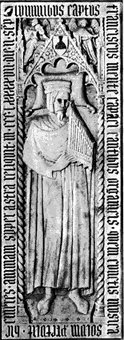 Tra i compositori dell'Ars nova italiana ricordiamo Francesco Landino (Fiesole 1325- Firenze 1397) (a sinistra), chiamato Francesco degli Organi, famoso, oltre che per le sue composizioni, per la grande perizia di esecutore su ogni tipo di strumento e per la sua cultura filosofica e poetica.
Tra gli altri ricordiamo: Bartolino da Padova, Matteo da Perugia, Zaccaria e Giovanni da Genova . La decadenza dell'Ars nova italiana si deve alla mutazione della vita culturale , more sensitive to influences from beyond the Alps. The musician who sanctioned this conclusion was Johannes Ciconia (1335-1411).


0 comments:
Post a Comment