Tuesday, April 25, 2006

Nauseous Four Months Post Partum


La frottola , resa celebre da Isabella d'Este (1474-1539) della corte di Mantova, è una forma poetico musicale d'origine popolare derivata dalla ballata ,con strofe di 6 o 8 versi ottonari consistenti in una ripresa e due stanze. La frottola si svolgeva su differenti forme poetiche: la frottola vera e propria, lo strambotto, l'ode, il capitolo, il sonetto, le stanze di canzone. Tra i compositori di frottole ricordiamo Petrucci, Cara, Tromboncino, Aquilano, Bossinensis.

Monday, April 17, 2006

Kodak M1020 Audio Out Of Sync

The carnival songs

The carnival songs were the soundtrack of the shows designed by Lorenzo de Medici for the enjoyment of the Florentines. The texts cover topics amorous or playful, presenting popular types (beggar, salesman, etc. ...), telling mythological stories of widespread knowledge, all with a folksy tone. Among the composers of carnival songs include: Coppinus Alexander, Alexander Agricola and Heinrich.

Adapting Old Printer Cable

forms

The humanistic revival of the beginning of the '400 linked to the Latin language, had obscured the pre-existing forms in the vernacular Italian Ars nova. The return to singing in Italian occurred in ' last two decades thanks to the '400 Lorenzo de Medici, the Magnificent, which evoked in Florence, the composition of carnival songs, and to Isabella d'Este who is responsible for the revival and development of the court of Mantua lies. The common features of these forms sixteenth ( carnacialeschi songs, tall tales, villanelle, songs and dances ) are: strophic structure, literary style (even with the use of dialect) and the prevalence of homophonic writing-chord 3 or 4 entries. Although the composition is for voices only, in most of the executions was only sung louder and leaving the other parties to the instruments, especially the lute.

Backyard Playset Sailboat

Italian folk-secular polyphony in Europe

Thanks to the spread of counterpoint by Flemish masters and singers had given a international character to the music sacred and profane . This cosmopolitanism favored the dissemination of texts on French chanson . A testimony to the spread and importance of songs in Italy in 1500 you with Ottaviano Petrucci who published collections of chansons (the Odhecaton and other collections). In the last decades of the fifteenth century, polyphonic music is laced with all major languages \u200b\u200bin the national birthing Villancicos in Spain, Lieder in Germany, carnacialeschi songs and tall tales in Italia. Più avanti si imposero anche il madrigale italiano e la chansons. L'acquisizione delle caratteristiche nazionali fu uno degli elementi che più contraddistinse la storia delle polifonie profane del '500: prima e più importante di tutte, quella italiana.

Pro 10 Hair Extension Wholesale

JOHN GABRIEL

Giovanni Gabrieli (Venezia 1554 ca.-1612), nipote di Andrea Gabrieli , proseguì l'opera di suo zio rendendola ancora più varia. Anche lui fu molto stimato by his contemporaries as well as for its technical organ, for his compositions. Most of his works are destination polychoral sacred structure. He grew, in relation to Andrew, the careful observance of the pace of the declamation of the words and phrases. His concept of music already belongs to the Baroque, its polychorality mixed voices and instruments has made an exercise of "concertante style."

Friday, April 14, 2006

Demonia Bootsbreak-in

Andrea Gabrieli

Andrea Gabrieli, (Venezia 1510 ca-1586) fu un famoso organista e, soprattutto, compositore. Egli tratto tutti i generi: dal vocale sacro al profano allo strumentale, tutti in stile veneziano. A. Gabrieli fu tra i primi a comporre i madrigali a 3 voci secondo la tecnica del contrappunto imitato. Godendo di molta stima e fama tra i contemporanei, ricevette compiti di notevole spessore da parte della Serenissima e non solo: egli scriveva la musica per i momenti più importanti e ufficiali.

Wednesday, April 12, 2006

Piture Of A Cake To Color

the Venetian school

La scuola romana expressed the well-known a cappella style that spread throughout Europe with the exception of the Catholic basilica of San Marco in Venice where formed a sacred repertoire very different: more a cappella style, even cultivated, were appreciated the compositions in which the items were mixed instruments , that could be two bodies of stringed instruments (viola) and wind (Cornet, trombone). Very often, the compositions were performed at polyvocal choirs divided, that is, two, three or four groups sing and play together, but in distant areas within the church. The music had Venetian magnificence of characters, di colore e di ricchezza sonora perché le esecuzioni non erano abbinate solo ad eventi sacri, ma anche politici. La cappella musicale di S.Marco aveva il compito di celebrare i maggiori eventi della Repubblica Veneziana. Venezia , nel XVI secolo, era ancora il centro economico più ricco d'Italia ed era molto influente politicamente . La musica non doveva essere da meno. Tra i maestri della Cappella si ricordano: Willaert, Cipriano de Rore (1563-64), Zarlino (1565-90), Croce detto il Chiozzotto (1603-09), Monteverdi (1613-43), Cavalli (1668-76) e Legrenzi (1685-90); tra gli organisti: Buus, Parabosco, Merulo, Padovano, Andrea Gabrieli (1566-86) and Giovanni Gabrieli (1584-1612). The latter (A. Gabrieli and G. Gabrieli).

Monday, April 10, 2006

Custom Made Candle Molds

Giovanni Pierluigi da Palestrina

Giovanni Pierluigi Palestrina was born in , the hills of Lazio, in 1524-25 . He stayed on the very important roles: as a singer began in the Chapel of Liberia, was organist and singing teacher in the cathedral of Palestrina and, finally, was master of the Cappella Giulia and singer in the Sistine Chapel of Rome, the city where he lived until the death in 1594.

Palestrina became famous for his sacred compositions and his use of counterpoint . Palestrina was estimated by both the musical contemporaries, that the after-effects. During the Romantic cult of Palestrina increased dramatically with the publication of his biography by Pope Marcellus.

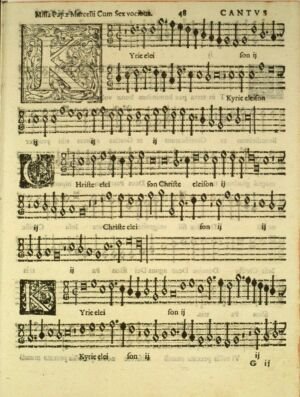
Palestrina's work consists almost entirely of polyphonic text-latin or, for the holy Catholic choirs for services. He wrote 102 put 4 or 5 entries, fewer than 6 and 8, the best known are: Missa brevis, Iste Confessor, Aeterna Christi Munera, Dies sanctificatus, Salve Regina, Pope wore the collars and Marcelli. The other form was widely used by Palestrina motet , 307 among which he wrote: Super flumina Babylonis, Pueri haebreorum, Song of Songs and the Stabat Mater.

The music of Palestrina to contemporary embodied the religious sentiment of the Counter-Roman and for posterity was one of the purest ideals of harmonious and Catholic sacred music. One of the merits of the creations of Palestrina, and the simplicity of means employed, starting with melodies that are combined into the fabric to the polyphonic harmonies formed by simple sequences of triads, ranged from passing notes and preparations and delays caused by the movement of parts. The discourse of the parties, then, is fluid thanks to a masterly conduct of the parties and contrapuntal combinations of items continually change.

Saturday, April 8, 2006

Women Wearing Open Girdles And Stockings

The culmination of sacred polyphony

In areas of Europe that were influenced by the religious reforms, sacred polyphony touched the artistic higher. The meeting between the Flemish counterpoint and melodic taste nascent had led to a new European-style polyphonic . The simplification of vocal counterpoint was embodied in a cappella style , that is for only items that led to the purification of expression that is the peculiar character of this artistic civilization. A cappella style developed in Italian cathedrals (except Venice), and touched the top art with composers such as Orlando di Lasso, Palestrina, Byrd and Luis da Victoria.

-THE ROMAN SCHOOL : S econd half of the fifteenth century the popes took care and improved continuously choirs of the Roman basilicas. This led the school to have a polyphonic Roman primacy in sacred music of the Renaissance . The oldest Roman Chapel Sistine was ordered by Pope Sixtus IV, followed by the Cappella Giulia, the Liberian Chapel, Chapel Pia. The most successful musicians of the Roman School were: Palestrina, Costanzo Festa (1480 ca.-1545), little soul John (1514-1571), Giovanni Maria Nanino (1544-1607) and Felice Anerio (1560 ca.-1614). The Roman school of polyphony continued its activity in the first part of the seventeenth century , distinguished by a taste of polychorality Baroque, of which the best known exponent is Orazio Benevolent .

Thursday, April 6, 2006

Buy Metal Core Wheels In Bulk

The Catholic counter

Due to the rapid expansion of new religious reforms, Pope Paul III convened the Council of Trent (1545-1563) for defined lines of engagement of the Catholic Counter Reformation. The sacred music was the subject of discussion and changes were: the abolition of all sequences with the exception of 5, the prohibition of using secular cantus sign in composition of polyphonic masses and the requirement that, in polyphonic compositions, the words were clearly intelligible.

-THE POLYPHONIC LAUDA : In the second half of the century, especially in Rome, had followed the great activities sponsored by S. Blacks Filippo (1515-1595), founder of the Congregation of the Oratory, also called the Fippini . Speakers at the religious services were made only from the sermon, the prayers and readings from song of praise to 3-4 polyphonic voices in chordal style, with lyrics in Italian. With the spread of the order of the Philippines also gained more and more polyphonic lauda reputation.

Monday, April 3, 2006

Sample Of A Welcome Song

Reforms religious music of the sixteenth century and the tradition

L ' religious unity that Christianity was able to maintain throughout the Middle Ages, was broken in the sixteenth century with the emergence of various reform movements . People like Martin Luther (1483-1546), John Calvin (1509-1564) of England and King Henry XVIII Tudor were the protagonists of these reforms. Following the reform changed the religious ceremonies and the role and the form of sacred music, therefore, was modified. A common consequence of the reforms was the replacement of Latin with the national language in the rituals of the Reformed churches.

-THE LUTHERAN CONFESSION AND THE CHOIR : The Lutheran was certainly the most important with regard to music. Martin Luther, the founder, was a connoisseur of the sacred music of his time and the Lutheran Mass for the faithful wanted to interact with the choral singing. The choir had thus a function that can be compared to that of Gregorian chant in the Middle Ages. The chorales were sung in unison by accompanied, if necessary, organ or other instruments.

-Huguenots and the chanting of psalms : More severe was, however, thought that Calvin in his post limited space for music admitting only the singing of psalms . The practical problem of this choice was related to the preparation of repertoire that took several years and was the work of famous poets and musicians of the era including Marot, Beza, and Bourgeois Goudimel.

-THE SONG AND THE ANGLICAN "Anthems" : The Anglican Church was the one who brought fewer changes in the liturgy. The main innovations were the Prayer Book (= prayer book) in 1549 the Archbishop of Canterbury, Cranmer Th in English and Book of Common Prayer Noted (= Book of Common Prayer set to music) contains the songs for the main prayers.