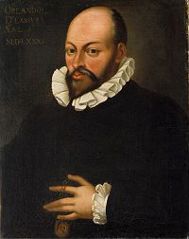
 Throughout the sixteenth the best singers were the ones they had studied in the major poet of Flanders . Flemish composers of the century were the major , a example was Orlando di Lasso (picture left) (Mons 1532 - Monaco di Baviera 1594). Others, however, became capiscuola new approaches to music as Adriano Willaert (Bruges about 1490. - Venice 1562).
 Other important composers include Cipriano de Rore (Mechelen 1516 - Parma 1565), Philip de Monte (Mechelen 1521 - Prague 1603) and de Wert Giaches (Antwerp 1535 - Mantua 1596).


Big Green Egg Store Locator
 The term Renaissance was coined in the mid nineteenth century by Jules Michelet and Jacob Burckhard , two historians, to indicate the artistic culture and thought flourished for centuries XV and XVI , first in Italy and then in other regions. The Renaissance is the period of cultural renaissance in Europe.
 MUSIC AND CIVILIZATION 'RENAISSANCE : to Renaissance music polyphonic means the production, both vocal and instrumental, between the mid-fifteenth century and the end of the XVI . During the Renaissance all arts flourished, and the music was present in all events of social life than politics. The choirs were formed by the best professionals and the Church was celebrating its rites with splendor and magnificence. The secular music was even more popularity and dissemination of dance greatly facilitate the development of instrumental music. The need to make music for entertainment by professionals or not, was a feature of the Renaissance period. Every gentleman must have had a musical education .

Wednesday, March 29, 2006
Friendship Poems With Background
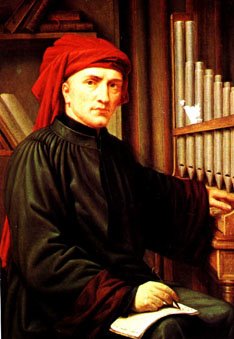 For Flemish musicians means the centuries XV and XVI which were formed in the choirs of the cities of Flanders , corresponding to the central and southern provinces of Holland and Belgium and some northern provinces of France. The development of musical culture was possible thanks to the favorable economic conditions and widespread prosperity enjoyed by this region from the fourteenth century. The chapels of Flanders singers formed the best and most famous composers of the time. The first important
 Flemish composer Johannes Ockeghem was (East Flanders around 1420 - Tours 1495). He was the first singer in the cathedral of Antwerp and Moulins, then became treasurer of the Abbey di S.Martino a Tours, una carica di grande responsabilità. Ockeghem è ricordato come prototipo dei compositori fiamminghi che svilupparono i più sottili artifici della scrittura canonica. Tra le sue composizioni ricordiamo Missa prolationum nella quale sono variamente combinate le indicazioni di tempo e la Missa cuiusvis toni che si può eseguire su qualsiasi scala tonale.
Il compositore fiammingo più importante è, invece, Josquin des Prèz (foto a sinistra)(Hainaut 1440 circa – Condé-sur-l'Escaut 1521). Josquin godette di grande stima sia tra i contemporanei che tra i postumi. Fu cantore nella Cappella del Duomo di Milano, nella cappella pontificia a Roma e alla corte di molte personalità dell'epoca (Sforza, Luigi XII re di Francia, ...). Il grande merito storico di Josquin è quello di aver posto l'attenzione nello stabilire rapporti di coerenza espressiva tra il testo è l'invenzione musicale .
-I LORO CONTEMPORANEI : Tra i compositori contemporanei a Josquin e Ockeghem ricordimo: Jacob Obrecht (1452 ca.- Ferrara 1505), Heinrich Isaac (1450 ca.- Firenze 1517. Fu a servizio di Lorenzo il Magnifico) e Pierre de la Rue (1460 ca.- Courtrai 1518. Fu a servizio dell'arciduca Filippo il Bello).

Sunday, March 26, 2006
Update Microsoft Dbase Odbc Driver
 A partire dal XII secolo in Inghilterra si iniziò a sviluppare un contrappunto diverso da quello continentale che si caratterizzò per l'utilizzo di procedimenti paralleli di terze e di seste . Furono i teorici inglesi a riconoscere l'intervallo di terza come consonante . Le composizioni inglesi del XIV secolo, soprattutto conductus e mottetti , erano in genere a 3 parti che spesso si muovevano parallelamente per terze e seste. Il più famoso esempio di composizione dell'epoca è la rota (Canon) "Sumer is icumen in " which dates from around 1240.
 After the Hundred Years War, many musicians moved to England across the English Channel doing so with the "English descant " on the third and sixth, which was learned and adopted, but with the cantus firmus in the upper voice. This kind of descant took the name of faux-bourdon ( false drone). The most famous was the English composer John Dunstable (1380-1453) , he greatly influenced other composers of both home and comtinentali including: Dufay, Binchois, Busnois. Other composers were: Leonel Power, John Benet.

Saturday, March 25, 2006
How To Get Exclusive Rights
Con lo sviluppo delle cappelle musicali crebbe notevolmente il numero delle composizioni sacre , in particolare le messe e i mottetti . Lo sviluppo del contrappunto portò alla disposizione a quattro parti vocali : il cantus o discantus o superius, da cui soprano; contratenor altus o altus, da cui contralto; tenor, tenore; contratenur bassus o semplicemente bassus, da cui basso.
Il mottetto , a 3 o 4 voci, era strutturato come una successione di più brani concatenati, in ognuna dei quali era sviluppata una frase del testo letteraria. Nel XV secolo il mottetto era diventato la forma esclusiva della polifonia sacra cantata durante le cerimonie del culto.
La chansons , di solito a 3 voci, nacque come una fusione delle forme profane dell'epoca. Il testo era in francese e parlava di storie amorose.

Thursday, March 23, 2006
Where Can I Buy Led Wallpaper
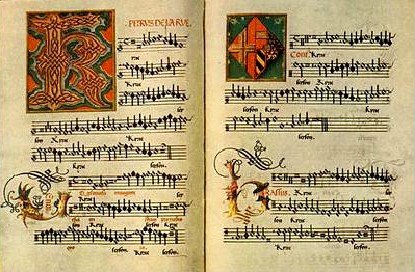 La tecnica del contrappunto fu definita durante il XV secolo e conobbe subito una vasta diffusione. Essa si basa sul principio dell' imitazione , libera o rigorosa, che contraddistingue l'elemento attivo capace di assicurare l'unità temetica delle composizioni. Nel contrappunto imitato c'è quindi una voce che espone un motivo (o soggetto ) chiamato dux ed altre che rispondono variandolo ( comes ), Nel XV secolo i maestri chiamavano l'imitazione canone e lo differenziavano in: canone mensurale e canone enigmatico . Nel primo una stessa melodia era eseguita contemporaneamente da più cantori, con ritmi e durate diverse. Tra i canoni mensurali ricordiamo: l' Agnus Dei della Missa "L'homme armé" of Pierre de la Rue . Enigmatic in the canons, however, appeared only on the ground that was used as a dux, and the response was not expressed in the notation but hidden under a riddle to solve. The fees are an example of the enigmatic intellectual conception in the period of transition from the Middle Ages to the Renaissance that sought symbols, troubleshoot devices, etc. .... Some examples of enigmatic canons can be found in 'Exemplary that seminal essay practical counterpoint (1774-75) of
 father GB Martini.
src="http://pagead2.googlesyndication.com/pagead/show_ads.js">

Baptism Thank You Wording
Durante il XV secolo la figura del musicista si affermò come ruolo professionale . Questo favorì la nascita delle cappelle musicali che formavano professionalmente i cantori, che erano così capaci di affrontare composizioni polifoniche molto complesse. Tra le cappelle più famose ricordiamo quella di Borgogna e quella della Fiandra . Con il passare dei secoli il numero di cappelle subì un costante aumento.

Recliner Coffee Table
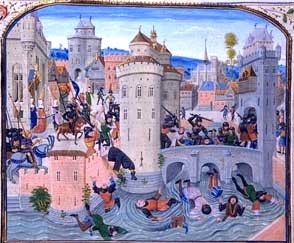 After the Hundred Years War (1339-1453), in France kingdom instability for a long time. The consequences of the war ripercossero on culture and hence the music. C within the art of music moved to England, but especially in Burgundy and Flanders . During this period ( XV sec.) Regained the importance sacred music and singing figured counterpoint and knew a wide spread .
Monday, March 20, 2006
House Repossession Land Registry
 During the twelfth century references, descriptions and illustrations of musical instruments are many. This may seem odd considering that most of the compositions were written for voices. However, it was found that in daily practice the compositions were performed by both singers and instrumentalists from with double or substitutions. This explains the fact that, before the sixteenth century, the manuscripts containing instrumental compositions were very few because the author composed his piece for voices, but he was conscious of the fact that same song was also performed by instrumentalists. The most famous codes containing these songs are the oldest manuscript of the fourteenth century containing a dozen dances in preparation monodic (British Museum), Robertsbridge Codex (music for keyboard instruments) and the Codex Faenza (or Code Bonadies). the most authoritative sources for knowledge of instrumental music and medieval instruments are the Treaty of Johannes de Grocheo and Tractatum de Music of Jerome of Moravia.
 The most important instrument of the Middle Ages was body . In the XII-XV were shown two different bodies: the portative and positive. Among chordophones remember the Exchequer (or Echiquier) and struck stringed plucked psaltery. Among string instruments include: the crotta (or broken) (the oldest), the fiddle (most common), the rebec and the jig. Among the wind instruments are cited: the trumpet, trombone, cornet in the wood flutes rights and stringers. They were also used the harp and various percussion instruments .

Thursday, March 16, 2006
Metric System Micrometer
compositions French and Italian Ars nova differ in many ways: the first is always a constructive plan that governs the structural elements, while the Italian is more freedom, melodic and rhythmic fuid expanse scan. These characteristics are present in the forms of the time as the madrigals, the hunts and ballads.
Madrigali
: The poetic structure of madrigals, in vogue in the early period of the Ars nova, was as follows: 2 or 3 triplets of the same order of eleven-syllable rhymes were followed by a refrain of heroic verse 2. The madrigals could be 2 or 3 entries. The music of the triplets was the same but varied in the chorus. Hunt: It 's a fee to 2 voices in unison accompanied by an instrumental tenor. The tests cover such topics as hunting, fishing, and market the game.
Ballad: The Ballad represented the most developed form of the Ars nova and Italian dominating the music scene from the mid-fourteenth century . The structure was as follows: recovery of two eleven-syllable verses, 2 feet each with two eleven-syllable verses rhyme identical, once the same as the recovery of two ways, (the first of them rima con l'ultimo, il secondo rima con il primo della ripresa), si ripete la ripresa da capo. Le ballate erano a 2 o 3 voci (cantus, tenor, contratenor).
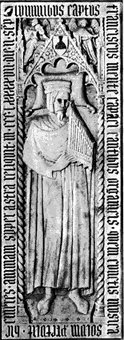 Tra i compositori dell'Ars nova italiana ricordiamo Francesco Landino (Fiesole 1325- Firenze 1397) (a sinistra), chiamato Francesco degli Organi, famoso, oltre che per le sue composizioni, per la grande perizia di esecutore su ogni tipo di strumento e per la sua cultura filosofica e poetica.
Tra gli altri ricordiamo: Bartolino da Padova, Matteo da Perugia, Zaccaria e Giovanni da Genova . La decadenza dell'Ars nova italiana si deve alla mutazione della vita culturale , more sensitive to influences from beyond the Alps. The musician who sanctioned this conclusion was Johannes Ciconia (1335-1411).

Wednesday, March 15, 2006
How Does A Sinus Infection Bring On A Toothache
 Italy where he was born and grew up the Ars Nova was the fourteenth of new vernacular culture, the culture that is which gave clear signals with the poetry of the Dolce stil novo and the painting of Giotto . As far as literature is certainly the primary source Decameron di Boccaccio : la storia di dieci ragazzi e ragazze che si erano rifugiati in una villa fuori Firenze per scappare alla peste e che si raccontavano novelle e concludevano le loro giornate mettendosi a “cantare e suonare e carolare(danzare)”.
 In questo periodo nacque la così detta “ poesia per musica ” che comprendeva madrigali , cacce e ballate . Il maggiore poeta per musica fu Franco Sacchetti (1332-1400) (immagine a sinistra) di cui ricordiamo le ballate “ O vaghe montanine pastorelle ” e “ Innamorato pruno ” e la caccia “ Moving the thought for a grove. "

Tuesday, March 14, 2006
Electric Recliner Malfunction
The technique of polyphony and counterpoint is also developed in Italy, although much more simp lice than the French one. Italian chapels and cathedrals of the thirteenth century was to cantus planus binary consists of a repertoire of liturgical melody accompanied by another melody that progressed free. Towards the end of this century, however, the musical culture of Northern Italy seems somehow influenced by the French. This comes from the Treaty mensural notation Pomerium in art musicae mensuratae (1321-1326) of the Paduan scholar Marchetto. In these years were written many Latin motets. Almost all of the production period was secular, even if the composers were mostly clergymen.

Monday, March 13, 2006
Buy Aluminum Heatsink In Miami
Most of the compositions of the time there is the allegorical-satirical poem "Roman de Fauvel " (1316 ), Consisting of about 160 pieces, mostly anonymous, from 33 3-part motets, some conductus , and some other lai. Among the composers are: Jehannot de l'Escurel, Pesstain de Chaillou, Philippe de Vitry (poet also highly appreciated and praised by Petrarch), Jean Vaillant, Pierre des Molins, Solage, Philippus de Caserta.
See also the post on LRRD Nova French at: http://storiadellamusica.blogspot.com/2006/03/lars-nova-francese.html # links
